



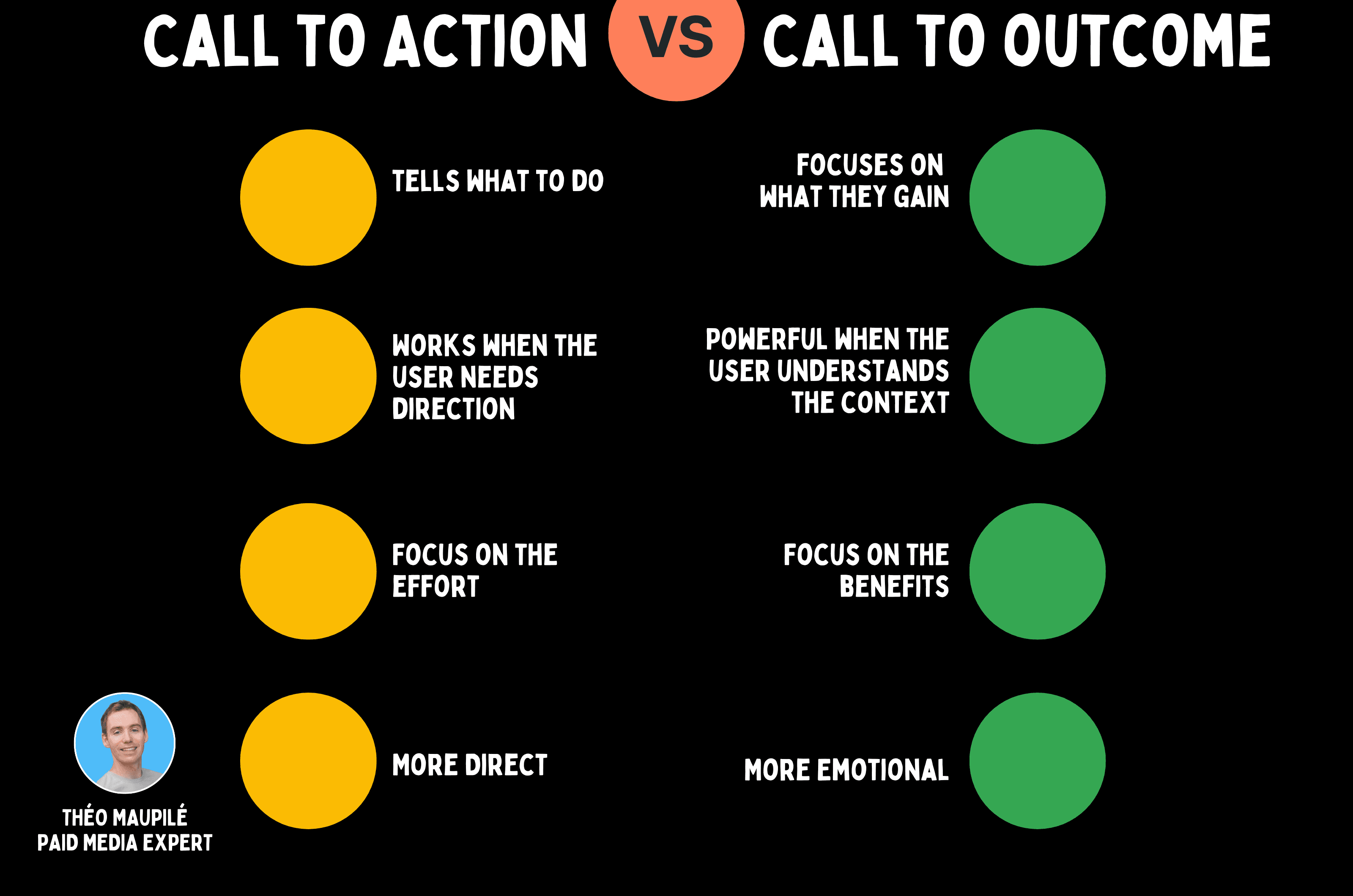
The impact of your message in Google Ads or Meta Ads campaigns
In the world of Paid Advertising, every word counts. A simple change in wording can turn an impression into a click, a click into a conversion, or, on the contrary, drive the user away. Yet one lever remains too often underestimated: the type of call you use.
Should you prompt the user to act directly, or should you let them glimpse the benefits to come? This strategic choice can deeply influence the performance of your campaigns on Google Ads, Meta Ads, or any other Ads Manager platform.
Call to Action: guiding the user step by step
The Call to Action (CTA) is a clear invitation to perform an action. It is direct, concrete, task-oriented. The goal is simple: to move the user forward in the conversion funnel.
Classic CTA examples:
Download now
Sign up
Book a call
This type of message is often used during the consideration phase. It works particularly well in Google Ads or Meta Ads campaigns when the user is still comparing their options and has not yet decided to take action.
Call to Outcome: selling a transformation, not an action
Conversely, the Call to Outcome puts the emphasis on the end result. It shifts the focus from the action to be taken toward the benefit the user will gain from it. It is no longer about clicking, but about gaining control, comfort, or freedom.
Call to Outcome examples:
Take back control of your schedule
Cut your spending without compromising your comfort
This type of message plays on projection and emotion. It is particularly effective in Paid Search campaigns built around a strong need, an urgent problem, or a transformational promise.
💡 Tip: in your Paid Media strategy, always align the message with the user’s real intent, not just with your internal KPIs.
Why this choice is strategic in Google Ads and Meta Ads
If you manage campaigns as a Google Ads expert or PPC expert, moving from an action-oriented call to an outcome-oriented call can significantly improve your click-through rate (CTR) and lower your cost per acquisition.
In a competitive environment such as Paid Search or Meta Ads campaigns, messages based on end benefits often have more impact than those centered on the action to be taken.
Building this lever into your Paid Media strategy
It is not about choosing a single style for all your campaigns. The most effective approach is still to test.
Why you should test call styles in your campaigns:
Every audience reacts differently depending on its level of maturity
A simple headline change can generate +10 to +30% conversions
Testing lets you align your message with users’ real intent
A/B testing is therefore an essential pillar of any high-performing Freelance Paid Media strategy.
Conclusion
The Call to Action demands an effort.
The Call to Outcome rewards that effort.
In your next SEA Google Ads or Meta Ads campaigns, ask yourself what will have the most impact: inviting the user to click, or projecting them into the final benefit. The answer is often found in the results of your tests.