



Hey! It’s Théo today. We’ll speak about a key topic if you run Paid Ads campaigns: conversion modeling in Google Ads. This concept can help you recover lost conversions, improve your bidding strategy, and boost the performance of your Ads account, even when users say “no” to cookies.
Why Conversion Modeling Is Essential for Paid Search
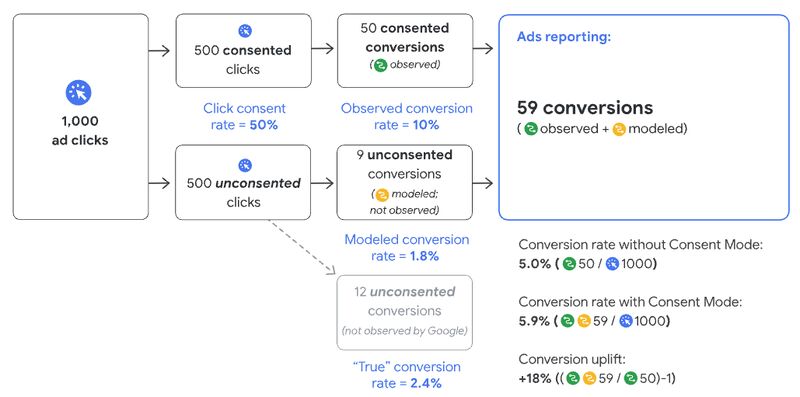
Every time a user declines cookies, part of your data disappears. That means fewer tracked conversions, less input for the algorithm, and a distorted view of your results. With Consent Mode and conversion modeling, Google fills in the blanks using its machine learning technology.
By analyzing the behavior of users who gave consent, the algorithm identifies reliable patterns and estimates the conversions you didn’t track. This helps keep your campaigns optimised and your decision-making solid, especially if you invest in Google Ads, Meta Ads, or any Paid Search strategy.
What Happens When You Miss Conversions
Let’s be clear. Missed conversions = less data. And less data means:
Your Smart Bidding system doesn’t have what it needs to make the right decisions
Your campaign reports are incomplete
With fewer conversions tracked, you lose clarity on what’s really working in your account.
How to Activate Conversion Modeling in Your Google Ads Account
To enable conversion modeling, two things are required:
First, you need Consent Mode correctly installed on your site. It allows Google to distinguish between consented and non-consented sessions.
Second, you need enough click volume for the algorithm to detect patterns. This is usually around 700 clicks in a short time frame, but it depends on your traffic and setup. Without that, modeling won’t activate, and you’ll keep losing valuable insights.
Pro Tips for Paid Media Experts
Google only reports modeled conversions when the system is confident they came from Ads interactions. So the results stay reliable.
That said, remember this: users who give consent tend to convert 2 to 5 times more than those who don’t.
Even with modeling, some conversions will stay invisible. But it’s a big step forward in campaign tracking and performance recovery.